
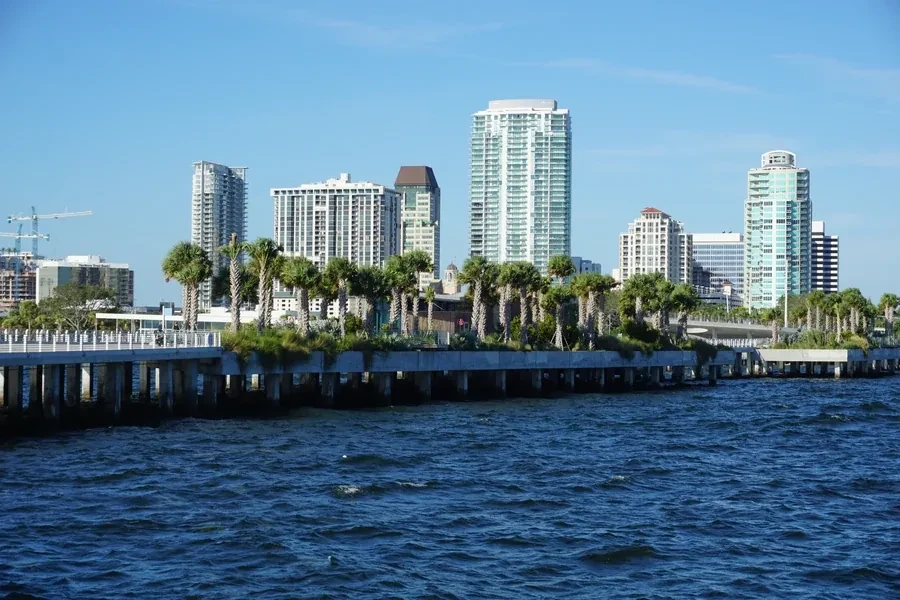
St. Petersburg's neighborhoods fall into a few groups. Downtown and the Edge District suit condo buyers, Old Northeast and Snell Isle cover historic and waterfront homes, Kenwood offers bungalow streets, and Shore Acres trades that for water and space. The Pinellas County Property Appraiser's comparable sales search pulls recent sales in any of them, filtered by waterfront and year built.
Downtown, the Edge District and Grand Central
If you're still deciding on St. Pete as a city, start with our guide to moving to St. Petersburg, which covers the lifestyle, the beaches and day-to-day costs. This post picks up from there and compares the neighborhoods inside the city, so you can narrow your search to a few streets.
Downtown is condo country, with towers along the waterfront parks and older mid-rise buildings a few blocks back. The Edge District and Grand Central run west from downtown along Central Avenue, with independent shops, breweries and a mix of small condos, townhomes and older houses for buyers who want the walkability without a high-rise.
Condo buyers have homework here. Florida law requires milestone structural inspections for condo and co-op buildings three or more habitable stories tall, starting by the end of the year the building turns 30, or 25 if the local building official requires it because of conditions like nearby salt water, and repeating every 10 years after that. Ask for the inspection report, the reserve study and any planned special assessments before you're under contract.
Old Northeast, Snell Isle and Crescent Lake
Old Northeast is the brick-street, historic-house part of St. Pete, with a grid of older homes running north from downtown toward the water. Snell Isle sits just across the bridge to the north and leans toward larger waterfront homes, and docks with bay access are common on its streets.
Crescent Lake wraps around a big city park with a lake and walking loop, and the streets around it have a mix of bungalows and older two-story homes. It's a good fit for buyers who want Old Northeast's character on a slightly broader range of house sizes.
Water views come with water risk. On Snell Isle and in Shore Acres, look up the exact address on FEMA's flood map service center before you tour, since the zone it shows drives your flood insurance cost and your lender's requirements, and get an insurance quote early. If you're also weighing historic neighborhoods across the bay, our Hyde Park Tampa guide makes a useful comparison.
Kenwood, Euclid-St. Paul and the Bungalow Streets
Historic Kenwood is known for its craftsman bungalows and an artsy, porch-sitting feel, and it sits right next to Grand Central's restaurants. Euclid-St. Paul, just to the north, has a similar housing stock with its own neighborhood association and tree-lined streets.
These areas tend to draw buyers who want character and a yard without paying for a waterfront address. The trade-off is age, because an older bungalow can come with original plumbing, older electrical panels and a roof that insurers will look at closely.
Bring a thorough inspector and budget for updates, and use our home inspection checklist to keep track of what to ask about. Renovated homes on these streets move differently from homes that still need work, so your agent should compare like with like.
Shore Acres, Pinellas Point and Gulfport
Shore Acres in the northeast is a waterfront neighborhood of mostly ranch-style homes on canals and the bay, popular with boaters and families who want a bigger lot. It's also low-lying and has flooded badly in recent storms, so elevation, flood insurance and any past claims belong at the top of your list. Pull the house's record on the Pinellas County Property Appraiser's site at pcpao.gov, which shows the year built and recorded sales, and use the office's comparable sales search to narrow recent sales to waterfront homes nearby.
Pinellas Point at the city's southern tip has waterfront and near-water homes on winding streets, with a more residential, out-of-the-way feel than the north side of town. Gulfport sits on St. Pete's southwest edge but is its own city, with its own small waterfront downtown, its own government and its own tax rates.
Commute matters wherever you land. If you'll work in Tampa, test the drive across the Howard Frankland or Gandy bridge at rush hour before you commit. When you're ready to see what's for sale, our St. Petersburg homes for sale page lists current homes, and a buyer's agent who works both sides of the bay can help you compare.
Frequently asked questions
Which St. Petersburg neighborhoods are the most walkable?
Downtown, the Edge District, Old Northeast and the streets around Crescent Lake are the easiest places to live without driving everywhere. Kenwood and Grand Central are close behind if a short bike ride works for you.
Is Gulfport part of St. Petersburg?
No, Gulfport is its own city. It borders St. Petersburg on the southwest side, so its taxes, rules and services are separate.
Do I need flood insurance in St. Petersburg?
If the home is in a FEMA special flood hazard area and you have a mortgage, your lender will require it. Check the flood zone and get a quote on the exact address before you make an offer.
What should condo buyers in St. Pete check first?
Ask for the building's milestone inspection results, its reserve study and any planned special assessments. Florida's condo safety laws can mean large repair bills in older buildings.